Iconography
A General Introduction and Overview
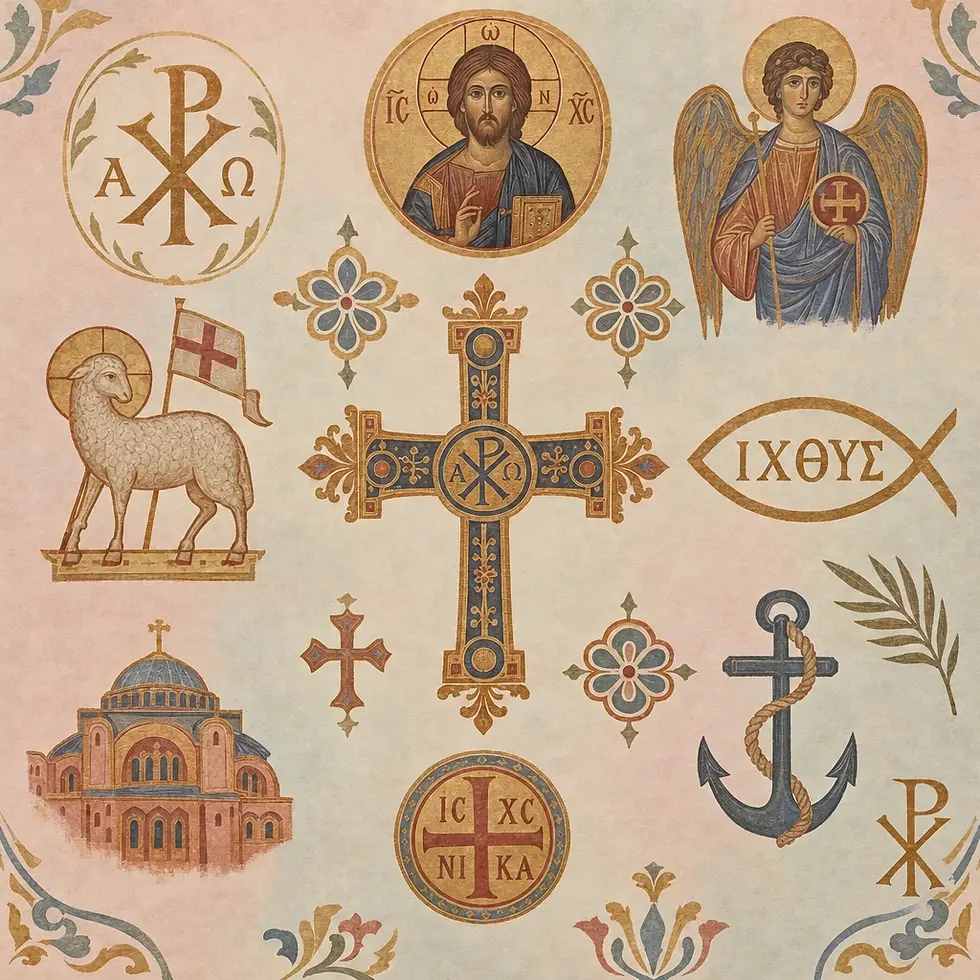
Iconography is broadly the study and use of symbols, images, picture and visual signs to communicate particular meanings, ideas, beliefs or messages. In simple terms, it is all about understanding what images and symbols represent and the messages they communicate. Iconography involves understanding different visual elements. For example, Pictures can be used to communicate a message or tell a story. Colours may carry meanings for example, red for love, danger or passion. Gestures such a hand or body position can communicate a particular meaning. Objects may represent something deeper such as a crown representing royalty or power. The cross, the heart and the dove are all examples of commonly used objects in Iconography. Iconography is important because it helps people understand messages without using many words. it helps to communicate cultural and religious beliefs and understand meaning behind paintings and artworks.

The History of Iconography
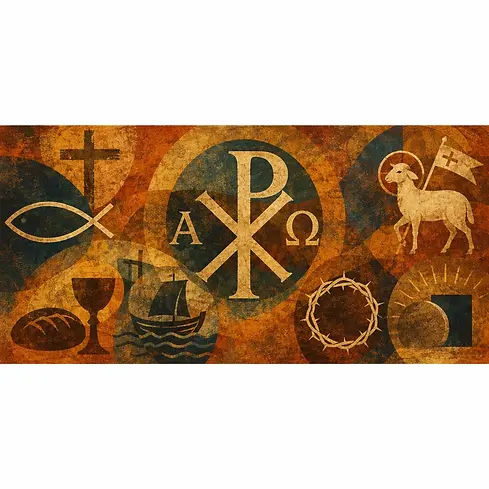
Religious Iconography began in ancient civilisations, long before Christianity existed. Examples include Ancient Egypt where Gods were represented through human and animal forms. Ancient Greece had Gods such as Zeus, Athena and Apollo represented in scriptures and paintings. Ancient Rome had images and statues in temples and homes to honour different Gods. As far as early Christianity is concerned, this emerged in the 1st - 4th centuries when Christians faced periods of persecution under the Roman Empire. Early Christians began using simple symbols to express their faith, sometimes in places such as underground burial chambers called catacombs. This brings us to the Christian Icons of Olga's collection ........
Olga's Icon Collection
The rise of Christian images (4th - 8th Centuries)
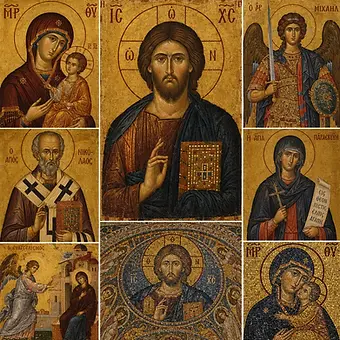
In the 4th century, Christianity became increasingly accepted within the Roman Empire. Emperor Constantine played an important role in this development. As Christianity grew, religious Art became more elaborate. Churches were decorated with images of Jesus, paintings of the virgin Mary, images of Angels and Saints, mosaics of biblical events and gold backgrounds representing heavenly glory. Olga's depictions are based on those of this period as well as the period which followed which was the Byzantine era (5th - 15th centuries). This period led to Icons not simply being regarded as ordinary paintings. In Eastern Orthodox Christianity, they became important aids to prayer, worship and spiritual reflection

18th century - St. Blessed Xenia of St Petersburg
One of the most beloved female saints of the Russian Orthodox church. The inscription reads Св Блаж - Holy Blessed.
Ксения Птб - Xenia of Petersburg. This depiction shows her as a pilgrim and an intercessor, with the city of St Petersburg behind her and Christ appearing in the heavens above.
Egg Tempura (with gold leaf on the halo), on wooden panel.
H40cm x W30cm

Byzantine - Virgin Mary and Christ Child
Belongs to the Eleousa (Virgin of Tenderness) tradition, in which Mary and the infant Jesus are depicted with faces close together, expressing Maternal love and the profound relationship. Marys halo signifies her holiness. The halo around the child's head identifies him as divine. Christ's halo often contains a cross.
Egg tempera and gold leaf on wooden panel.
Craquelure (distressed board) H28cm x W22

17th century - Our Lady of the seven sorrows
Also known as The Mother of God of the seven swords. It depicts the Virgin Mary with seven swords piercing towards her heart. It is one of the most powerful images of Mary's sorrow, compassion and suffering in Orthodox Christian devotion. The inscription in the upper corners identifies her as the Mother of God.
МР - An abbreviation of Mother
ФУ - An abbreviation for God. Together these form the traditional Greek inscription for Mother of God
Egg Tempura and gold leaf on wooden panel.
H28 x W22

Spyidon - work in progress
TBA

Maria - work in progress
TBA

Our Lady
TBA